





Montessori Environment
Creating an Inspiring English and Arts and Crafts Classroom
As an English as a Foreign Language (EFL) teacher, I teach English and Arts and Crafts to first- and second-grade children at a public school in Llíria, a large town about 30 kilometres from Valencia, Spain. My school is one of the largest public schools in the Valencian Community, with a highly diverse student population and a wide range of educational needs, cultural backgrounds and personal circumstances.
The children come predominantly from low- to middle-socioeconomic backgrounds. Our school community includes Moroccan and Algerian students, South American children, and children from other European countries, including the Netherlands and Italy. This cultural and linguistic diversity makes our school a particularly enriching environment, but it also presents challenges when it comes to ensuring that every child feels included, motivated, and capable of learning.
I teach six different classes in total: 1A, 1B, 1C, 2A, 2B and 2C. My weekly timetable consists of two English lessons and one 90-minute double period of Arts and Crafts taught in English. Having this longer session allows me to develop more creative, practical and interdisciplinary activities, giving children the opportunity to use English in meaningful contexts rather than simply learning vocabulary and grammar in isolation.
My main objective is to create an environment where children feel safe, curious, independent and motivated to learn. I strongly believe that the classroom environment plays a fundamental role in the learning process. For this reason, I have organised my classroom around the children's needs, interests and characteristics, taking inspiration from Montessori principles, active learning methodologies and the importance of emotional well-being.
A different learning environment
The classroom as a space for freedom, exploration and connection with nature.
My classroom is a very small prefabricated building located in the middle of the school playground. Although the space is limited, I have tried to transform it into a welcoming and stimulating learning environment where children can experience English in a different way from their regular classroom lessons.
Whenever possible, we move the tables and chairs outside and take advantage of the playground. I have noticed that being outdoors can help some children feel calmer, concentrate better and engage more positively with the activities. It also allows us to connect learning with the natural environment, offering a change of atmosphere that can be particularly beneficial for young learners who find it difficult to remain seated for long periods.
I want my classroom to be more than a place where children come to complete worksheets or memorise new words. I want it to be a space where they feel comfortable expressing themselves, making mistakes, asking questions and discovering new things. Since children spend a considerable amount of time in their regular classrooms, I see my classroom as an opportunity to offer a different experience: one that encourages movement, autonomy, creativity and active participation.
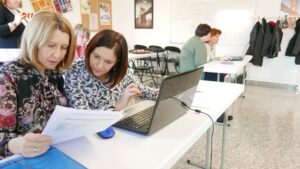
Picture 1. The stationery area: “Take what you need”
Promoting autonomy, responsibility and cooperation through everyday classroom routines.
One of the most important areas in my classroom is the stationery corner. I consider it a fundamental part of my teaching approach because it gives children the opportunity to make decisions, manage materials independently and learn how to share resources responsibly.
In their regular classrooms, students generally follow a more structured seating arrangement and use their own pencil cases, where materials are often labelled and organised individually. My classroom offers a different approach. Children can move around more freely and collect the materials they need from the stationery area without having to ask for permission every time they need a pencil, a pair of scissors, some glue or a sheet of paper.
The guiding principle is simple: “Take what you need.”
The materials belong to the whole classroom community, and this shared responsibility is an important part of the learning process. By using common resources, children gradually learn that they must take care of the materials, use them appropriately, and return them to their place so that other classmates can use them afterwards. Nothing is individually labelled, as I want children to understand that the classroom belongs to everyone.
This system also encourages them to organise their time, anticipate what they need for a task and become more independent. Of course, these habits do not develop overnight. They require patience, consistency and repeated practice, particularly with children who are still developing their organisational and self-regulation skills.
My approach is also inspired by Montessori philosophy, particularly the emphasis on independence and autonomy, the prepared environment and respect for shared spaces. We have classroom duties, and children participate in tidying up and cleaning the room after activities. We use cloths, water and soap when necessary, and I encourage them to leave everything as they found it so that the next group can enter a clean, organised and welcoming environment.
I believe these small routines teach valuable life skills that extend far beyond the English classroom. Children learn that being part of a community involves contributing, caring for others and respecting the environment we share.
Picture 2. The Cosmic Area: Learning beyond the English language
Encouraging curiosity through astronomy, geography, zoology and biology.
Another important feature of my classroom is what I call the Cosmic Area. This space contains a collection of attractive and engaging materials related to astronomy, geography, zoology and biology. I have created it because I believe that learning a foreign language should not be limited to acquiring vocabulary and grammatical structures. Children should also have opportunities to develop their curiosity, discover the world around them, and experience the pleasure of learning.
We live in the 21st Century, and I strongly believe education should encourage children to become curious, independent thinkers rather than passive recipients of information. At this age, children naturally want to explore, touch, observe and ask questions. I want to make the most of this curiosity by providing materials that invite them to investigate topics that interest them.
The Cosmic Area is available to children once they have completed the main task planned for that lesson. They can choose a material, explore it independently or share their discoveries with classmates. Whenever possible, I encourage them to use English to name objects, describe what they see, ask questions and communicate their ideas.
For example, a child exploring a globe might identify countries, while another child looking at an animal book might discover new species or learn about their habitats. These experiences provide opportunities to connect language learning with real-world knowledge in a natural and meaningful way.
I also find this area particularly useful because children do not all work at the same pace. While some need more time to complete the main activity, others finish earlier and are ready for an additional challenge. Rather than asking these children to wait or giving them more of the same work, I offer them an opportunity to explore something new.
My intention is to foster intrinsic motivation: I want children to discover that learning can be enjoyable in itself, that their questions matter and that there is always something new to explore.
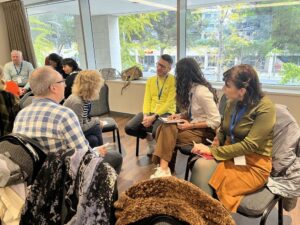
Picture 3. Freedom of choice and positive classroom management
Building trust, independence and respectful relationships.
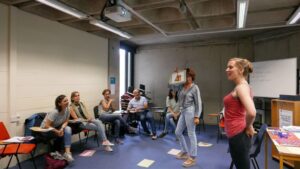
One of the most distinctive characteristics of my classroom is that there is no fixed seating plan. Children are generally free to choose where they sit and whom they work alongside. I believe that giving them a certain degree of freedom helps them feel that they have a voice in their own learning environment.
Of course, freedom also requires responsibility. Sometimes, children become distracted when sitting next to their friends or find it difficult to concentrate in a particular place. When this happens, I try to approach the situation calmly and respectfully. Rather than immediately punishing them, raising my voice or threatening them with consequences, I ask them to consider whether their current seating arrangement is helping them learn.
If they are constantly talking or disturbing others, I kindly invite them to find another place where they can concentrate better. My intention is not to make them feel that they have done something wrong as individuals, but to help them understand the consequences of their choices and recognise what they need to succeed.
I want children to understand that I am on their side. I am not their enemy, and classroom rules are not simply restrictions imposed by an adult. They exist to help everyone feel comfortable, respected and able to learn.
This approach is particularly important in my context because I work with children with different learning needs, including some students diagnosed with autism and ADHD. The availability of additional support in the school is limited, which means I often have to manage a wide range of needs within the classroom myself.
Consequently, I try to create an environment that offers flexibility, predictable routines and opportunities for movement and independent work. I recognise that every child is different and that strategies that work well for one student may not be equally effective for another. My aim is to observe their behaviour, understand what they might need, and adapt my approach whenever possible.
I do not always get everything right, and managing such a diverse group of learners can be challenging. Nevertheless, I believe that positive relationships, patience and respect are essential foundations for effective learning.
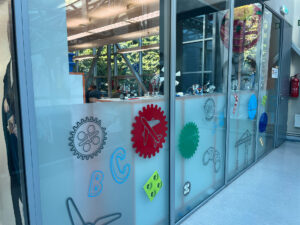
Picture 4. Promoting reading through a welcoming library
Developing a love of reading through comfort, choice and positive experiences.
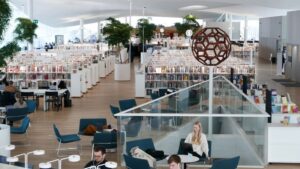
Reading promotion is another important part of my teaching philosophy. After completing an Arts and Crafts activity, I encourage children to visit the school library, where they can take off their shoes, place them neatly to one side, and settle into a comfortable space to read.
They can choose a phonics book that matches their reading level or explore a picture book that catches their attention. Children really enjoy this routine, and I have noticed that the library offers a calm and welcoming atmosphere where they can slow down and engage with books at their own pace.
I want reading to be associated with pleasure rather than obligation. For many children, especially those who may not have extensive access to books or reading opportunities at home, school can play a crucial role in developing positive reading habits. Providing an attractive space where they can choose what to read helps them build confidence and establish a more personal relationship with books.
The library also complements our English lessons. Phonics books help children practise the relationship between letters and sounds, while picture books expose them to new vocabulary, stories, illustrations and different ways of understanding the world. Even when children cannot read every word independently, they can interpret illustrations, predict what might happen next and develop their comprehension skills.
I believe these moments are particularly valuable because they allow children to experience English without the pressure of completing a formal exercise. They can explore books, enjoy stories and gradually develop the confidence to read more independently.
Final reflection: Creating a classroom where every child belongs
Looking back at the way I have organised my classroom, I realise that the physical environment reflects my broader understanding of education. I do not see teaching English and Arts and Crafts as simply delivering content or preparing children for academic achievement; I see it as an opportunity to help them develop independence, curiosity, creativity, responsibility and respect for others.
Working in a large and culturally diverse public school brings challenges, particularly when resources and additional support are limited. Teaching six different groups, each with its own dynamics and individual needs, requires flexibility, organisation and constant reflection. There are days when the classroom is noisy, routines do not work as expected or some children need more support than I can provide at that moment. Nevertheless, these difficulties encourage me to keep observing, adapting and looking for better ways to reach my pupils.
I believe that children learn best when they feel safe, valued and involved in their learning. For this reason, I try to give them opportunities to make choices, take responsibility, explore their interests and learn through practical experiences. The stationery corner, the Cosmic Area, the flexible seating arrangements, the outdoor learning opportunities and the reading routine are not isolated features. They are all part of a coherent approach that places the child at the centre of the learning process.
Ultimately, my goal is to create a classroom where children do not simply learn English, but experience it as a tool for discovering the world, expressing themselves and connecting with others. I want them to leave my classroom feeling that they are capable of learning, that their ideas matter and that school can be a place where they are genuinely happy to be.
For me, the greatest achievement is not when a child memorises a long list of vocabulary, but when that child becomes curious enough to ask another question, confident enough to try something independently, or excited enough to pick up a book simply because they want to discover what is inside. Those small moments are what make teaching meaningful to me.