













Many non-native educators reach a comfortable linguistic plateaux and ask themselves how to move from B2 to C1 in English as a teacher. Transitioning from an upper-intermediate (B2) level to an advanced, spontaneous (C1) level is not about learning obscure vocabulary or memorising complex grammar rules.
Instead, it involves mastering pragmatic nuance, developing natural conversational flow, expanding idiomatic range, and building the professional confidence required to lead discussions, debates, and international projects without hesitation.
The B2 vs. C1 Divide: Understanding the Shift
At the B2 level, a teacher can communicate clearly, deliver pre-prepared lessons, and understand main ideas. However, reaching C1 requires an upgrade in flexibility and spontaneous expression.
Understanding how to move from B2 to C1 in English as a teacher means shifting from functional correctness to stylistic precision.
| Linguistic Area | Upper-Intermediate (B2) Standard | Advanced (C1) Professional Standard |
| Vocabulary Usage | Uses common, general adjectives (good, difficult) | Employs precise, nuanced terminology (effective, challenging) |
| Discourse Markers | Relies on basic connectors (however, because) | Seamlessly uses advanced transitions (nevertheless, consequently) |
| Spontaneity | Pauses briefly to search for specific words | Expresses complex ideas fluidly with minimal hesitation |
Proven Strategies for Elevating Your Professional English
1. Consume Native Professional Media Daily
To express yourself like an advanced user, immerse yourself in high-level spoken content. Listen to educational podcasts, BBC radio documentaries, and academic panels. Pay attention not just to what is said, but to how speakers hedge opinions, introduce counterarguments, and use subtle intonation.
2. Practice Active Vocabulary Shadowing
When reading professional articles or listening to lectures, note down functional word collocations rather than single words. Instead of noting “impact”, write down “exert a profound impact on”. Rehearse these phrases aloud until they become part of your active spoken repertoire.
3. Embrace Spontaneous Debate and Professional Discussion
Push yourself beyond familiar classroom instructions. Seek opportunities to engage in unscripted professional discussions where you must defend opinions, analyze educational trends, and articulate nuanced arguments on the spot.
The Necessity of Total Language Immersion
While self-study, reading, and listening apps provide a solid foundation, you cannot achieve C1 fluency in isolation. To break through the B2 ceiling, you must step into environments where English is the sole medium of social and professional interaction. Total immersion forces your brain to stop translating internally and start thinking natively in English.
Reach Advanced Fluency with English Matters
Escaping the B2 plateau requires a supportive, structured environment where you can practice advanced communication without fear of making mistakes.
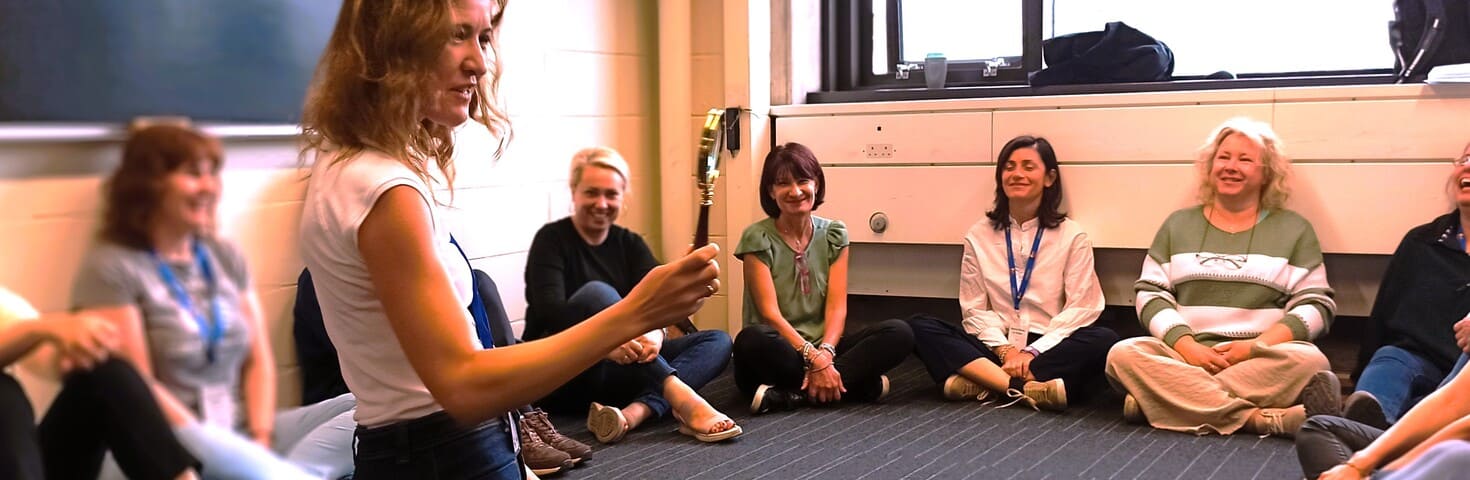
This is where English Matters offers the ideal breakthrough opportunity. Their acclaimed Erasmus+ mobility course, Talking to People (C1, C2): A Language and Culture Course for Teachers, is specifically designed for educators with C1 or C2 level of English as a teacher. Set in culturally vibrant English-speaking environments, English Matters provides an effective combination of workshops, seminars, project-based learning, and field projects that will help participants develop their communicative competence and explore beyond the language. Observing culture, history, and its people creates learning, motivation, and natural curiosity that invite communication.