















Captivating a room full of pupils in the digital age requires more than slides and traditional textbooks; it demands mastering storytelling in the classroom to capture your students’ attention.
At its core, educational storytelling is the deliberate technique of framing curriculum content within narrative structures ̶ ̶ using characters, conflict, suspense, and resolution to make abstract concepts memorable. By transforming static facts into compelling human stories, teachers can bypass cognitive fatigue, ignite curiosity, and foster deep conceptual understanding across any subject.
The Neuroscience of Narrative: Why Stories Stick
To understand the power of storytelling in the classroom to capture your students’ attention, one must look at how the brain processes information. When pupils listen to a bullet-pointed lecture, only the language-processing parts of the brain (Broca’s and Wernicke’s areas) are activated. However, when they hear a story, brain sweeps reveal that emotional, sensory, and motor cortices light up simultaneously.
This psychological phenomenon ̶ known as neural coupling ̶ allows students to experience the narrative as if it were real.
| Narrative Component | Cognitive Impact on the Pupil | Practical Classroom Application |
| Relatable Protagonist | Triggers empathy and emotional investment | Frame scientific discoveries through the personal struggles of the scientist |
| Central Conflict/Obstacle | Creates suspense and activates problem-solving | Present historical events as unsolved mysteries or ethical dilemmas |
| Resolution & Reflection | Anchors core concepts into long-term memory | Ask pupils to rewrite the story ending based on alternative variables |
Practical Techniques for Integrating Storytelling Across Subjects
Simple structural adjustments can instantly elevate your daily lessons.
1. The “Problem-First” Hook
Instead of introducing a topic by defining terms on the whiteboard, start with a dramatic scenario. Rather than saying “Today we are studying gravity,” try: “In 1665, a young student was forced into isolation during a global plague, pondering why objects always fall straight to the ground rather than sideways.” This immediately hooks curiosity before introducing mathematical formulas.
2. Personification of Abstract Concepts
In subjects like chemistry, biology, or economics, turn intangible processes into character-driven narratives. Describing an enzyme as a specialized key searching for its matching lock, or market forces as competing forces in a rivalry, helps pupils visualize complex systems effortlessly.
3. Student-Led Narrative Creation
Shift the narrative task to your pupils. Ask them to write a first-person diary entry from the perspective of an oxygen molecule travelling through the human bloodstream or a historical figure making a pivotal decision.
Master Narrative Pedagogy and Storytelling with English Matters
Developing the confidence, vocal presence, and pedagogical techniques to use narrative effectively takes professional training and hands-on practice among supportive peers.
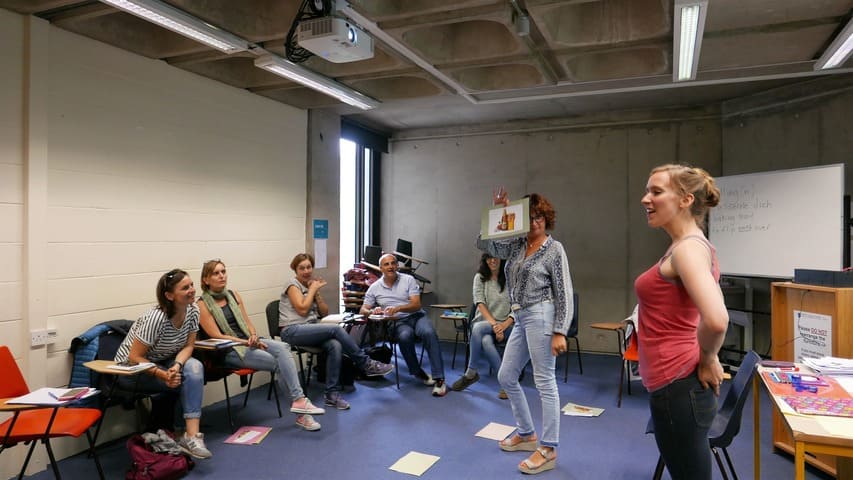
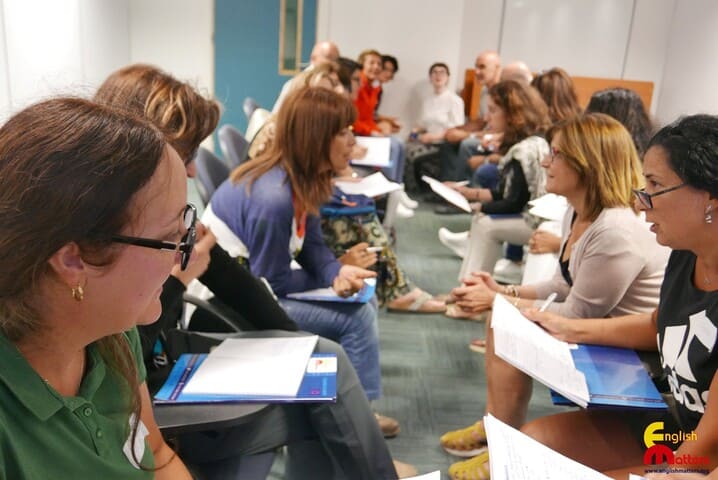
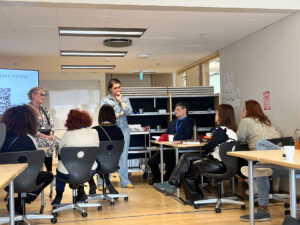
This is precisely where English Matters provides the ultimate solution. Through their dedicated Erasmus+ training course, Storytelling for Teaching, English Matters offers primary and secondary teachers a transformative professional development mobility in inspiring European locations.